
Landscape Research – Issue 8 (Volume 50, Issue 8, 2025)
The latest issue of Landscape Research brings together a set of international papers that question the usefulness of long-standing distinctions between “urban” and “rural” landscapes.
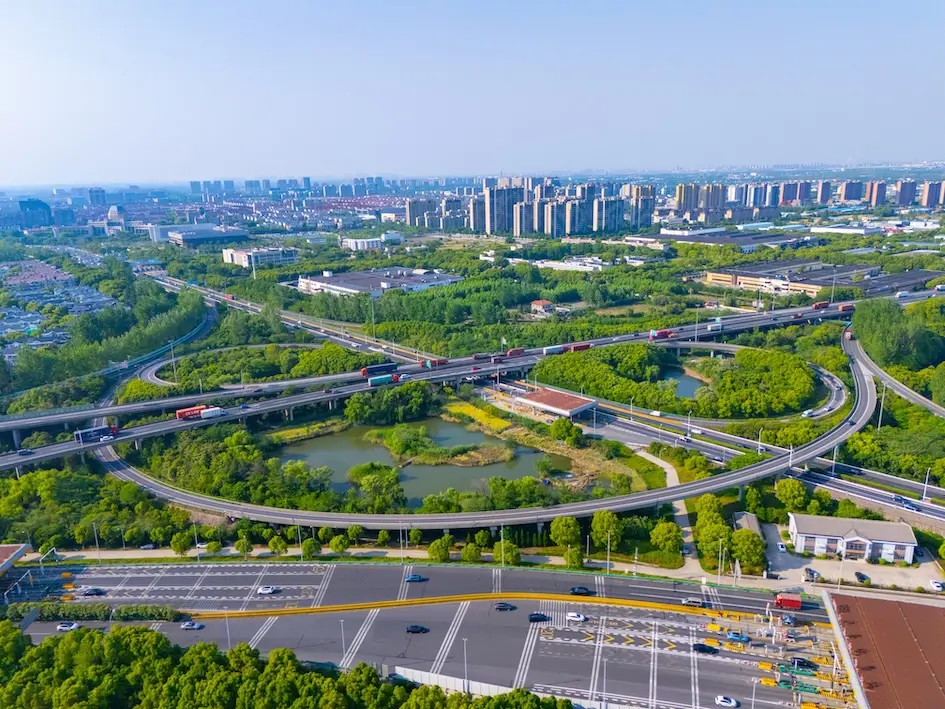
The latest issue of Landscape Research brings together a set of international papers that question the usefulness of long-standing distinctions between “urban” and “rural” landscapes. At a time when food systems, restoration policy, climate adaptation and development pressures increasingly overlap, the issue explores how land, labour and livelihoods are being reorganised across hybrid territories that do not sit comfortably within conventional planning categories.
An issue anchored in agrarian urbanism that also explores adjacent questions of ecology, representation and urban landscape governance, this publication examines landscapes shaped simultaneously by agricultural practice and urban processes. Rather than treating the countryside as separate from the city, the contributions show how farming, restoration, extraction and everyday life are deeply entangled across peri-urban zones, city margins and so-called rural hinterlands.
Framing the issue
The thematic coherence of the issue is set out in the editorial paper by Nitin Bathla and colleagues, Towards an agrarian urbanism beyond the rural–urban divide. This contribution articulates the central argument of the collection: that inherited rural–urban binaries often obscure the ways contemporary landscapes are produced, governed and lived. The editorial positions agrarian urbanism as a lens through which to better understand these entanglements and their implications for landscape research and practice.
Land, livelihoods and restoration
Questions of restoration and agrarian practice as lived, economic activities are foregrounded in Stefan Laxness’s paper, The politics of interdependence in community-led landscape restoration. Drawing on detailed fieldwork, the paper examines how restoration can operate as a livelihood strategy, shaped by local power relations, shared responsibilities and more-than-human interdependencies, rather than as a purely technical ecological intervention.
Related concerns about agrarian futures and socio-ecological change are taken up in Francesco Galli’s contribution, Apple production in search of alternative rural futures beyond extended urbanisation in peripheral agrarian hinterlands: monocultures as dynamic, more-than-human assemblages. By reframing monocultural agriculture as a complex assemblage of human and non-human actors, the paper challenges simplified narratives of rural production and highlights how agrarian landscapes are actively remade under conditions of market pressure, climate stress and urban influence.
Together, these papers speak directly to contemporary policy debates around restoration targets, agricultural resilience and rural livelihoods, while emphasising the importance of everyday practice and local agency.
Urbanisation as a material process
The material dimensions of urbanisation are explored in Luke Harris’s paper, Soils in motion: the metabolism of New York City’s urban grounds. Following soil as it is excavated, processed and redistributed through construction projects and municipal programmes, the paper challenges assumptions that urban landscapes are shaped only by buildings and infrastructure. Instead, it reveals soil as a critical, politically charged material underpinning greening initiatives, redevelopment and environmental remediation.
By focusing on these often-hidden material flows, the paper connects agrarian urbanism to wider public concerns about circular economies, environmental justice and the environmental costs of urban expansion, demonstrating how urban and agrarian processes are materially intertwined.
Hybrid territories and contested futures
Several papers in the issue examine landscapes that resist simple classification as either urban or rural. Antonio José Salvador, in Re-programming agrarian urbanism in South Milan: the peri-urban question, investigates how peri-urban agricultural spaces are shaped by planning frameworks that can both enable and constrain long-term renewal. The paper highlights how simplified “programming” of land uses may undermine the capacity of peri-urban landscapes to adapt to changing social, economic and environmental demands.
Questions of identity and narrative are central to Alessandra Marcon’s paper, Urban narrative and peasant imaginaries in French hybrid territories: a perspective from the Vendée Bocage. This contribution examines how planning discourses frame agrarian identities and ways of life, and how those narratives influence whose futures are made visible—or marginalised—within hybrid territories.
A different perspective on hybridity is offered by Elvira Pietrobon in Urbanisation without the city, ruralisation without the agrarian: Bamako, as seen from the “village in the city” of Lassa. By examining everyday practices within a “village in the city”, the paper challenges assumptions about uniform urbanisation and highlights the persistence of agrarian logics within rapidly expanding urban contexts.
Perspectives, representations and urban landscape governance
Alongside its core focus on agrarian urbanism, the issue also brings together papers that extend the discussion into questions of representation, ecological impact and the governance of urban landscapes across different cultural and political contexts.
In Of visions and practice: interpreting contemporary forms of agrarian urbanism, Anna Fera, Anita Martinelli and Antonio José Salvador examine the relationship between conceptual visions of agrarian urbanism and their practical translation on the ground. The paper offers a critical bridge between theory and practice, highlighting how competing imaginaries, policy frameworks and everyday constraints shape what agrarian urbanism becomes in lived landscapes.
Large-scale infrastructural transformation is addressed in Berfin Şenik and Osman Uzun’s paper, Evaluating the impact of mega-projects-induced land-cover changes on habitat quality: a case study of Istanbul. Using spatial analysis, the study assesses how major urban development projects affect habitat quality, contributing to wider debates on ecological loss, urban expansion and environmental assessment in rapidly transforming metropolitan regions.
Questions of perception and representation are explored in Sarah Bolivar’s Reconstructing the ‘self’: representation tactics for multispecies empathy. The paper investigates how representational practices can foster empathy across species boundaries, offering conceptual tools that resonate with broader landscape debates on more-than-human ethics, care and relationality.
Historical and ideological dimensions of urban landscape design are examined in Evolving ideologies and practices of parks in post-1949 China: a study on Tianjin Water Park by Yiwei Pan, Juewei Shi and Chunyan Zhang. Tracing shifts in park design and governance over time, the paper situates urban parks within changing political, social and cultural frameworks, offering insights relevant to contemporary discussions about public space, state influence and environmental values.
Together, these papers broaden the scope of the issue, demonstrating how landscape research engages not only with land-use and production, but also with representation, ecology and the evolving governance of urban environments.
Why this issue matters now
As governments, planners and communities respond to climate change, food security concerns and land-use pressures, the limitations of rigid rural–urban categories have become increasingly apparent. Issue 8 of Landscape Research offers timely, grounded insights into how landscapes are shaped through interdependent social, economic and ecological processes, and how those processes are experienced in everyday life across diverse contexts.
The issue will be of interest to researchers, practitioners and policymakers concerned with restoration, peri-urban development, agricultural change and the future governance of landscapes in an urbanising world.
Explore all articles in Landscape Research Volume 50, Issue 8 on the publisher’s website, where the full papers are available to read online.
More news
All news
News · 3 September 2026
New podcast revisits Laura Alice Watt’s The Paradox of Preservation as its tenth anniversary approaches
LRG Chair Professor Laura Alice Watt joins the *In Common* podcast to revisit 'The Paradox of Preservation' as the book approaches its tenth anniversary—and to consider
News · 28 August 2026
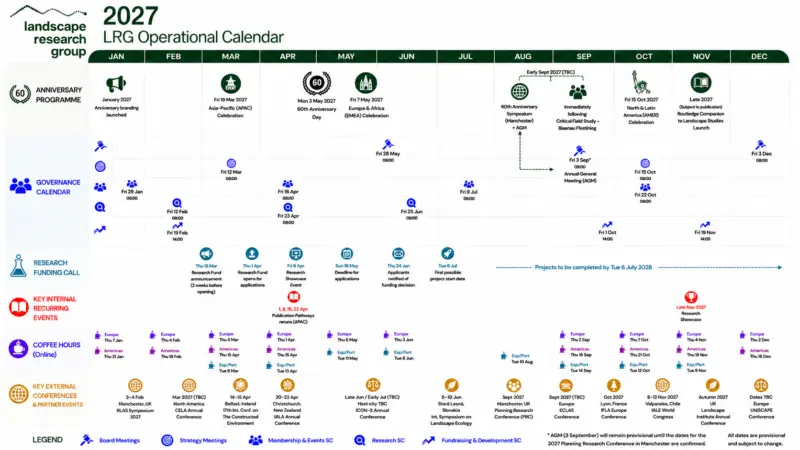
LRG at 60: our 2027 anniversary programme
Explore the developing programme for LRG’s 60th Anniversary year, including regional celebrations, research and network activities, and our proposed flagship gathering in September 2027. Discover the
News · 21 August 2026
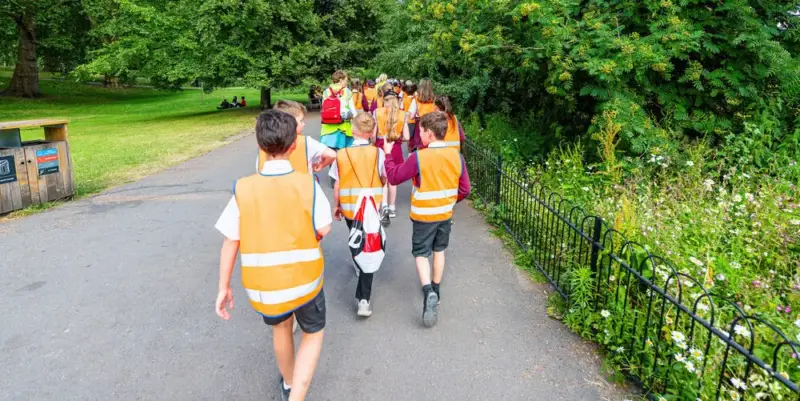
Help shape the proposed Natural History GCSE for England
LRG members are invited to contribute their expertise to a UK Government consultation on the proposed Natural History GCSE for England, with particular opportunities to inform
Get stories like this by email
The newsletter carries the quarter’s best of these, straight to your inbox.