LRG Research Fund 2026: Envisioning Kilifi’s future through the eyes of its young people
Can interactive visualisation give young people a stronger voice in shaping their landscapes? Robert Newell and his team are exploring how digital tools can help communities in Kilifi, Kenya, imagine and engage with possible futures. Working across Kenya and Canada, the project will develop a mobile-friendly visualisation tool through which young people can explore nature-based solutions and contribute their perspectives to local planning and environmental decision-making.
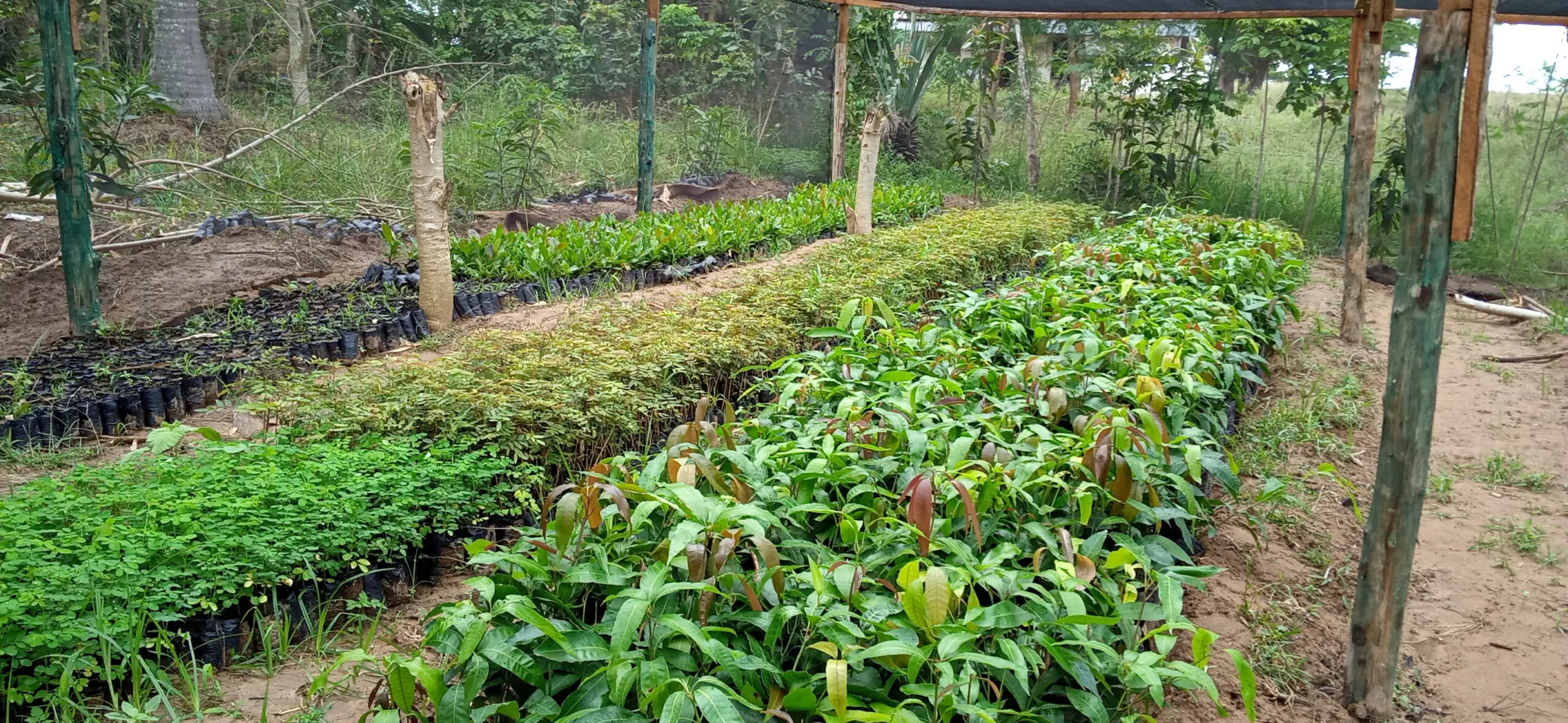
How can digital tools help young people take a more active role in shaping the landscapes in which they live? One of LRG’s 2026 Research Fund projects will explore that question in Kilifi, Kenya, using interactive landscape visualisation to bring possible futures to life.
Youth Envisioning the Future: Visualisations as Planning Tools in Kilifi, Kenya brings together researchers and practitioners in Canada and Kenya to develop an interactive tool through which young people can explore different approaches to nature-based solutions in their own community.
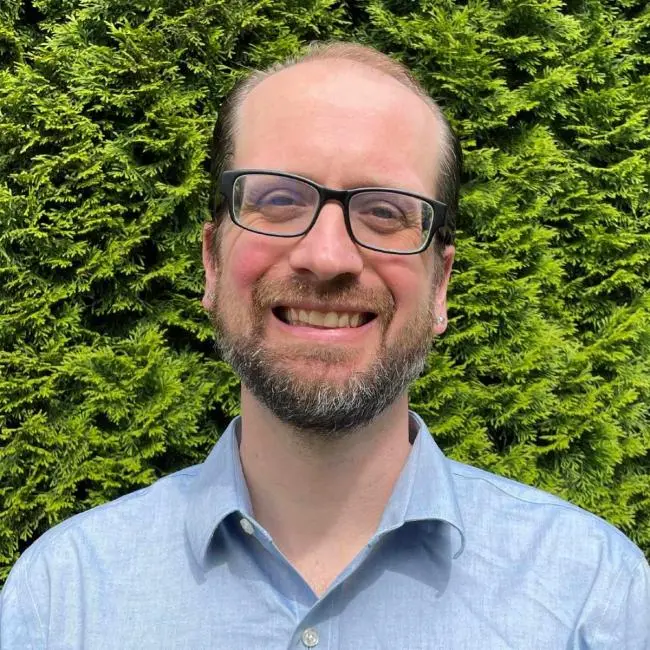 Led by Dr Robert Newell, Canada Research Chair in Climate Change, Biodiversity and Sustainability and Associate Professor at Royal Roads University, the project responds to rapid development pressures in Kilifi, a coastal community that is increasingly becoming a tourist destination. Working with Dr George Fedha, Associate Faculty Member at Royal Roads University and Adjunct Faculty Member at Pwani University, and Caroline Dama, Country Coordinator at Green World Campaign Kenya, Rob will explore whether interactive visualisation can help make planning more accessible and meaningful to young people who are often underrepresented in civic processes.
We spoke to Rob about the ideas behind the project, what the team hopes to learn in Kilifi, and why a 550-kilometre walk across Vancouver Island might tell us something about the researcher behind the research.
Please tell us a little about yourself. We’d love to hear about your current role, your research interests, what first sparked your interest in landscape research, and how you came to lead this project.
I am the Canada Research Chair in Climate Change, Biodiversity and Sustainability at Royal Roads University, and my research focuses on local sustainability planning. My research is community-based and applied, and I work with local governments and community groups to develop and experiment with tools that support participatory planning and community engagement.
This work is driven by my commitment to practical research that makes progress towards real-world sustainability challenges, as well as my deeply held belief that community members should be involved in the planning processes that shape how their homes, communities and places of value are developed and managed.
My research into interactive landscape visualisations for participatory planning began during my PhD studies. For my doctoral research, I developed a visualisation tool to support inclusive coastal planning and management. Following best practice in integrated coastal management, I developed the visualisation as a navigable virtual environment that allows users to walk through a coastal place and explore the land and marine environments as interconnected domains.
Since then, I have used this approach in other planning contexts, including urban densification, food systems, public parks and watershed management.
Could you introduce your project team? Who is involved, what expertise do they bring, and how does the team work together?
I am the Principal Investigator in this research. I have led a number of community-engaged research projects that use systems thinking and visualisation to examine sustainability issues, including projects exploring food justice and equity, integrated watershed management and approaches to local development.
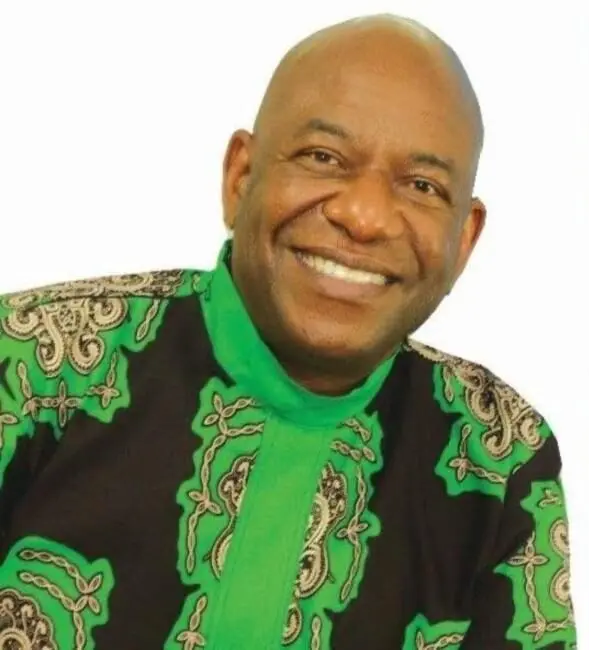 George Fedha is a collaborator based in Kilifi. He is an Associate Faculty Member in the School of Leadership Studies at Royal Roads University and an Adjunct Faculty Member at Pwani University in Kilifi. George has more than 30 years’ experience in development and humanitarian cooperation, partnerships, resource mobilisation, strategy and operations, including 15 years in leadership positions at the United Nations World Food Programme. His work applies scholar-practitioner approaches in areas including community engagement, rural transformation and leadership in complex and fragile settings.
 Caroline Dama is the Country Coordinator of Green World Campaign Kenya, where she has worked since 2013, and is also based in Kilifi. She works with schools, youth groups, community members and farmers in coastal and arid and semi-arid lands, helping to establish resilient food and water catchment systems and supporting sustainable and regenerative farming practices. Her work includes developing schools as action-learning centres where communities can learn about nature-based solutions.
Our collaboration spans both countries. George and I meet at Royal Roads when he is in Canada teaching, while in Kilifi he can meet Caroline face-to-face. When all three of us come together, we navigate the time difference and connect via Zoom.
What inspired this project? Was there a particular experience, observation, challenge or question that first made you think, “This is something worth researching”?
George has been a resident of Kilifi for many years, and he explained to me how the community is increasingly becoming a tourist destination. This shift towards tourism has led to concerns about encroachment on ecosystems and wider environmental impacts. George introduced me to Caroline, who shared these concerns and explained how Green World Campaign Kenya is working to address these issues through nature-based solutions.
I shared with George and Caroline my work using visualisations to support participatory planning and environmental management, and we agreed that this type of tool could be particularly useful in the Kilifi context.
We also discussed its potential to engage young people. Caroline works with young community members, while my previous research suggests that interactive visualisation can be effective in engaging younger demographics. Young people are often disconnected from civic processes, so exploring ways to involve them more effectively in local planning and governance is an extremely worthwhile area of research.
How does this project fit into your wider research interests or career? Is it the next step in a longer journey, or does it represent a new direction?
I have researched the use of visualisations to support planning for many years, and new research questions emerge after every study.
There are two areas that I have not yet been able to pursue fully, but which this project will allow me to explore. The first is whether these tools can better involve young people in local planning and civic processes. The second is how interactive visualisations can be delivered through mobile devices.
That second question is particularly important for accessibility: visualisation tools need to be experienced on a device or platform appropriate to their intended users. Until now, my visualisation tools have been developed for laptops and virtual reality headsets. In this project, we will develop tools for mobile devices, as these are the computing devices with which many young community members in Kilifi are most familiar.
If your project is successful, who do you hope will benefit from it?
The project will develop a tool for envisioning and digitally experiencing nature-based solutions in Kilifi. It will be made available through a public project website and given to all participants once it has been fully developed and tested.
Our hope is that the tool will continue to be used after the project to support local planning, youth engagement and education around nature-based solutions in Kilifi.
What impact do you hope your work will have on the wider field of landscape research? Are there assumptions you hope to challenge, conversations you hope to start, or new directions you hope to encourage?
Research into visualisation planning tools has made interesting progress in creating ways to communicate meaningfully with communities about the implications of different local development or environmental management scenarios. However, there are significant gaps in terms of the communities and demographics involved in this work.
First, the vast majority of this research takes place in the Global North. This project, by contrast, will engage a community in the Global South.
Second, existing work typically does not focus on young people, despite the potential appeal to younger participants of the virtual-environment and game-like aspects of interactive visualisation.
We hope this project will open new avenues for landscape visualisation and planning research by expanding the geographical and demographic boundaries of current work in this field.
What role do you think organisations such as the Landscape Research Group play in supporting researchers and strengthening the landscape research community?
The Landscape Research Group has a valuable role in supporting transdisciplinary research involving both academic and non-academic collaborators. As an organisation that develops and fosters international networks of scholars and practitioners, LRG is uniquely positioned to facilitate collaborations that combine academic knowledge with on-the-ground expertise in addressing real-world sustainability challenges.
LRG also plays an important role in knowledge mobilisation and dissemination through channels such as Landscape Research and Landscape Exchange.
What does receiving the LRG Research Fund mean to you, your team and your project?
Funding from the Landscape Research Group has made this project possible. It will enable us to undertake a novel research project exploring new avenues of visualisation research through engagement with younger demographics.
It will also support the creation of a practical visualisation tool for a community in Kenya – a country where relatively little research or practice using visualisation planning tools has been conducted.
Looking ahead, what are you most excited about over the coming months? Is there a particular stage of the research, place you’ll be visiting, collaboration you’re developing, or discovery you’re hoping to make?
I am extremely excited to develop a visualisation research tool focused on a community outside Canada. I have conducted a number of visualisation research projects, but they have all centred on places in Canada. This project gives me the opportunity to expand the geographical boundaries of my research.
I am also very excited to see how we can translate these visualisation tools into mobile-friendly formats. My previous projects have not created tools for mobile devices, and this will be an important advancement in my work, particularly in opening new opportunities to engage young people who often use mobile devices as their main computing platform.
Finally, we’d love to know something about you and your team members that isn’t on your public bios. Perhaps it’s a favourite landscape, an unexpected hobby, a book that has influenced you, or simply something that helps us get to know the person behind the research.
George, Caroline and I are all passionate about the environment, and in our work we strive to foster landscapes made up of healthy ecosystems.
Over the last 15 years or so, I have developed a hobby of going on extremely long walks, so that I can experience a wide variety of landscapes and environments within a single route. These walks have ranged from 20 km to 100 km. Now that I am a father of two, I cannot find the time to cover the same distances, but I still enjoy a 20–25 km walk when I have the opportunity.
After completing and submitting the first draft of my PhD dissertation, my walking hobby led me to embark on a much longer journey spanning the length of Vancouver Island in Canada, from the southernmost city of Victoria to the northern town of Port Hardy.
The walk was more than 550 km, and I completed it in 16 days. On my last day, I saw a black bear – a delightful way to end the journey.
Looking ahead
Over the coming months, the team will move from collaborative design to developing an interactive environment and testing it with young people aged 15–29 in Kilifi. Participants will be able to explore different approaches to nature-based solutions and consider their advantages, disadvantages and feasibility, while the researchers investigate whether the experience can strengthen understanding, interest and participation in local planning.
The visualisation is also intended to have a life beyond the research itself. The team plans to make the tool and its underlying resources openly available and use the perspectives gathered from young participants to inform recommendations for local government and Green World Campaign Kenya.
Youth Envisioning the Future ultimately asks a question with implications far beyond Kilifi: what changes when young people are given not only a voice in planning, but an opportunity to step inside possible futures before decisions are made?
More news
All news
News · 3 September 2026
New podcast revisits Laura Alice Watt’s The Paradox of Preservation as its tenth anniversary approaches
LRG Chair Professor Laura Alice Watt joins the *In Common* podcast to revisit 'The Paradox of Preservation' as the book approaches its tenth anniversary—and to consider
News · 28 August 2026
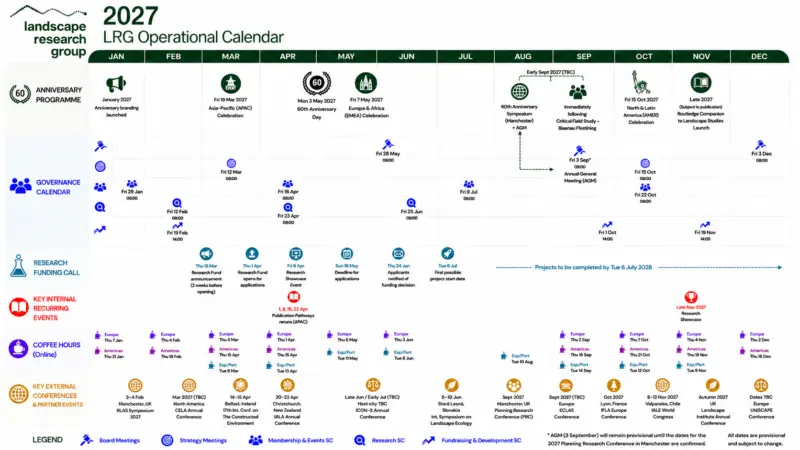
LRG at 60: our 2027 anniversary programme
Explore the developing programme for LRG’s 60th Anniversary year, including regional celebrations, research and network activities, and our proposed flagship gathering in September 2027. Discover the
News · 21 August 2026
Help shape the proposed Natural History GCSE for England
LRG members are invited to contribute their expertise to a UK Government consultation on the proposed Natural History GCSE for England, with particular opportunities to inform
Get stories like this by email
The newsletter carries the quarter’s best of these, straight to your inbox.