
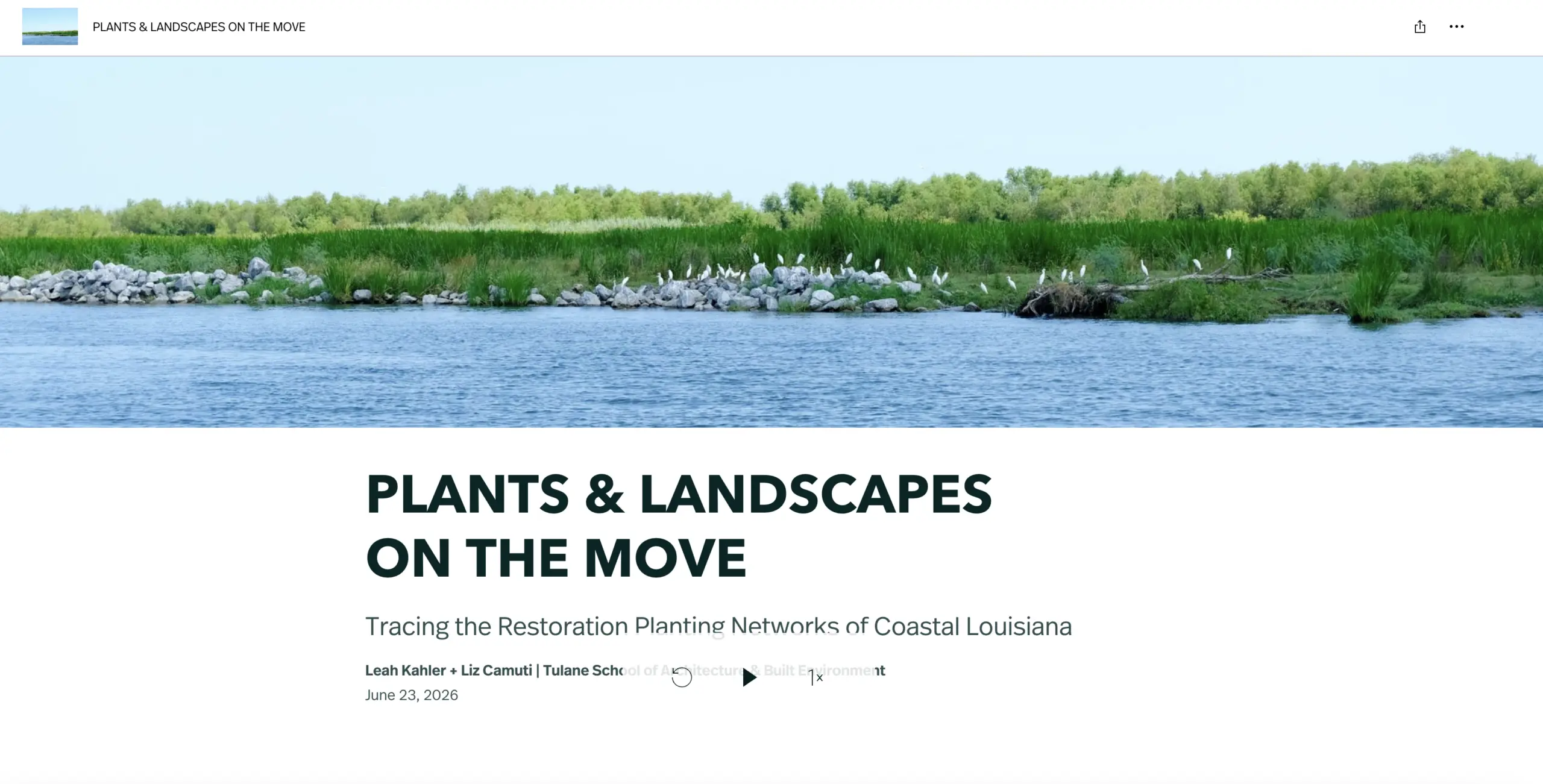
Plants and Landscapes on the Move: Mapping Plant Procurement Networks in Louisiana’s Coastal Restoration Infrastructure
A project report led by Leah Kahler and Liz Camuti on how plants for Louisiana's coastal restoration are grown and sourced, drawing on 11 interviews.
Mapping Plant Procurement Networks in Louisiana’s Coastal Restoration Infrastructure
Leah Kahler, Principal Investigator
Liz Camuti, Co-principal Investigator
Project Overview
Despite the scale and ambition of Louisiana’s Coastal Master Plan in addressing land loss and flood risk, it lacks explicit integration of climate mitigation strategies or emissions reduction targets that are increasingly urgent for the region’s survival. This disconnect represents a critical gap wherein the very plant procurement processes supporting restoration efforts could either contribute to or mitigate climate impacts—yet remain largely unexamined within official frameworks.
Through semi-structured interviews with 11 growers and industry experts and a case study of the restoration efforts at the Central Wetlands Unit, the project illuminated these largely unseen plant production sites and highlighted the collaborative landscape management strategies emerging in response to environmental change. The research documented the socio-ecological networks of the plant trade in southern Louisiana, examining the diversity of nursery landscapes where plants are grown for various coastal restoration pathways. By investigating cultivation sites, growing practices, and sourcing networks, the research revealed how plant procurement for these infrastructural projects is responding to—or working against—the need for adaptive and climate-mitigating construction methods in this vulnerable region.
Plantshed mapping and stories from interviews growers and restoration experts can be accessed via this StoryMap.
Summary of Findings
Four Pathways to Restoration
Not all types of coastal restoration projects involve planting, but for those that do, our research revealed four typologies of nurseries growing plants for coastal restoration;
- State-administered plant research centers
- Large-scale, for profit nurseries
- Mid-scale coastal advocacy and non-profit nurseries
- Small-scale, community-led nurseries
Each has its own relationship to the state’s official restoration efforts via the Coastal Master Plan, planting pipelines, and plant-sheds, or the geographic bounds of where a nursery sources its material and where they are planted along the coast.
Consolidating Industry, Expanding Plantsheds
The species and locations of plants grown for coastal restoration is largely dependent on research conducted at the US Department of Agriculture’s Natural Resource Conservation Service’s Golden Meadow Plant Material Center (PMC) in Galiano, LA.
Today, the coastal restoration nursery industry is rapidly consolidating, with increasingly fewer active nurseries supplying plants to large-scale restoration projects each year. Two well-established commercial nurseries dominate the lion’s share of coastal restoration projects. This dynamic translates to increased greenhouse emissions as plants travel further distances from source to site and as well as reduced genetic diversity.
One CPRA official stated, “There’s two primary [ones] that provide them to us right now. There are others, but most of these are nurseries we have relationships with. They’re not just people that just pop up and pop in.” Both nurseries dominating large contracts were born out of beginnings in mitigation banking. In addition to the ecological diversity and emissions implications of this industry consolidation, this also translates into economic justice implications for a region in significant need for regenerative industry beyond oil and gas extraction. While smaller nurseries do exist, we heard from growers across the board that it can take multiple years before they could reach the required stock quality and quantity to bid out for the larger projects. Nursery landscapes and outplanting sites alike are experiencing the effects of climate change: storm damage, drought, longer periods of sustained heat, and saltwater intrusion in sources of water mean that two nurseries is not enough to form an industry resilient to coastal storms.
Production at a Range of Scales
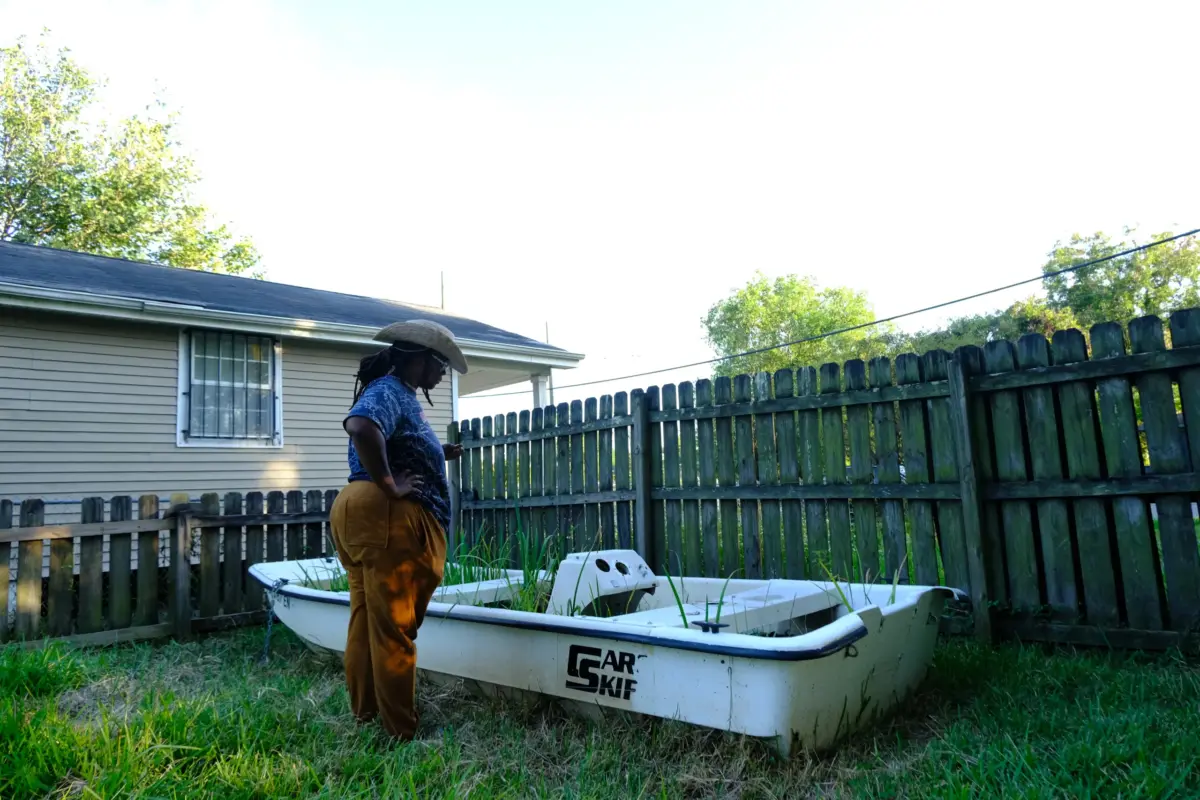
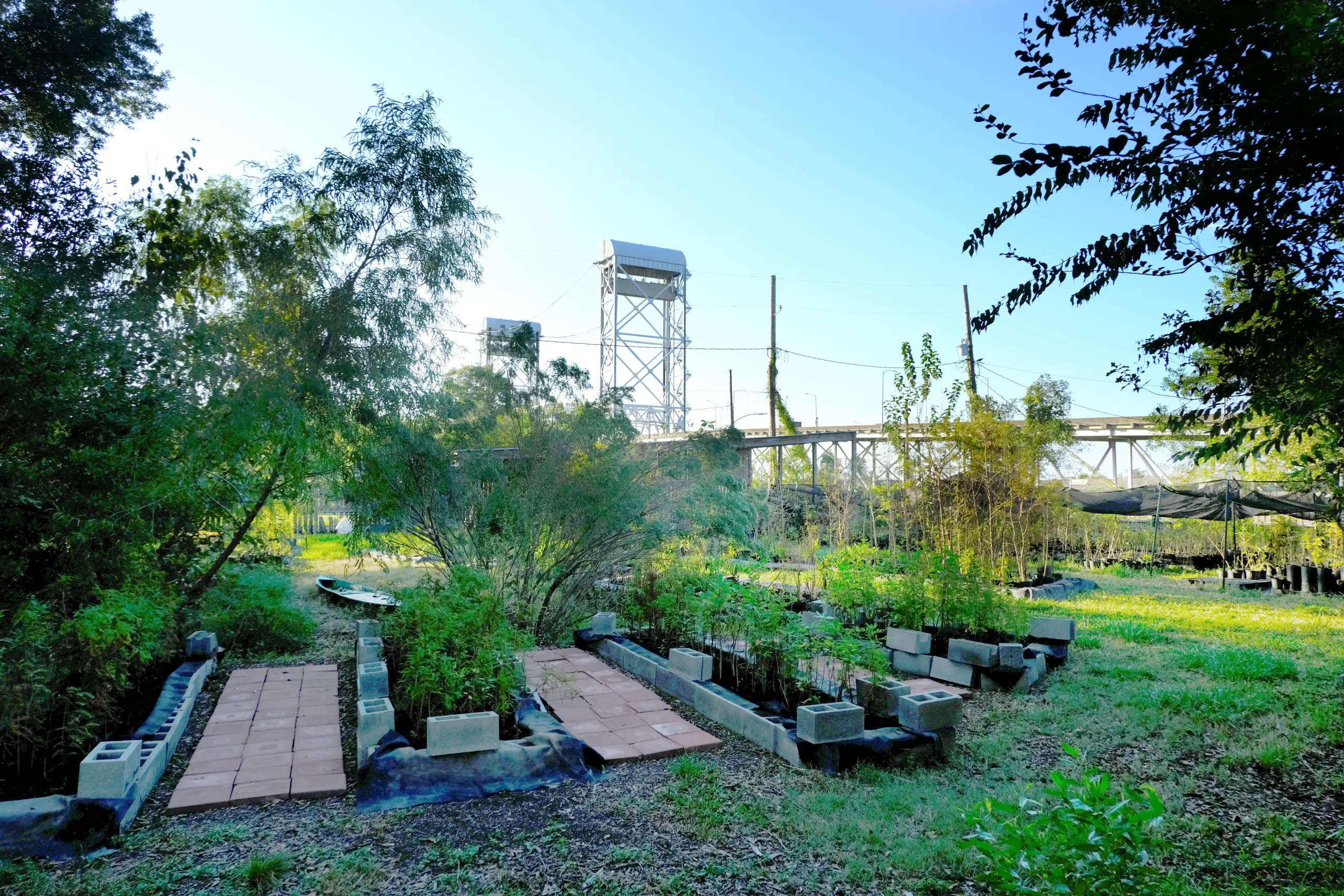
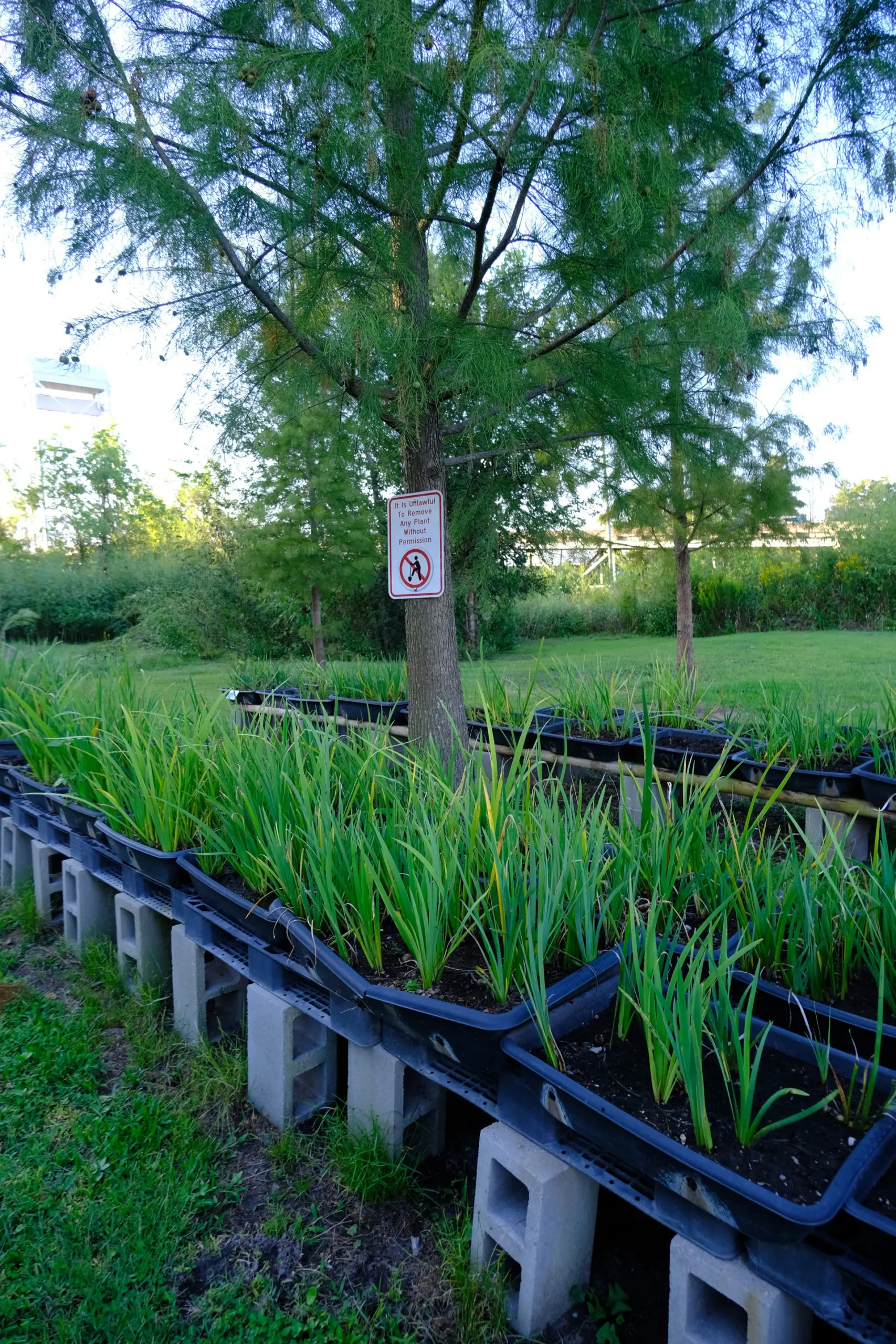
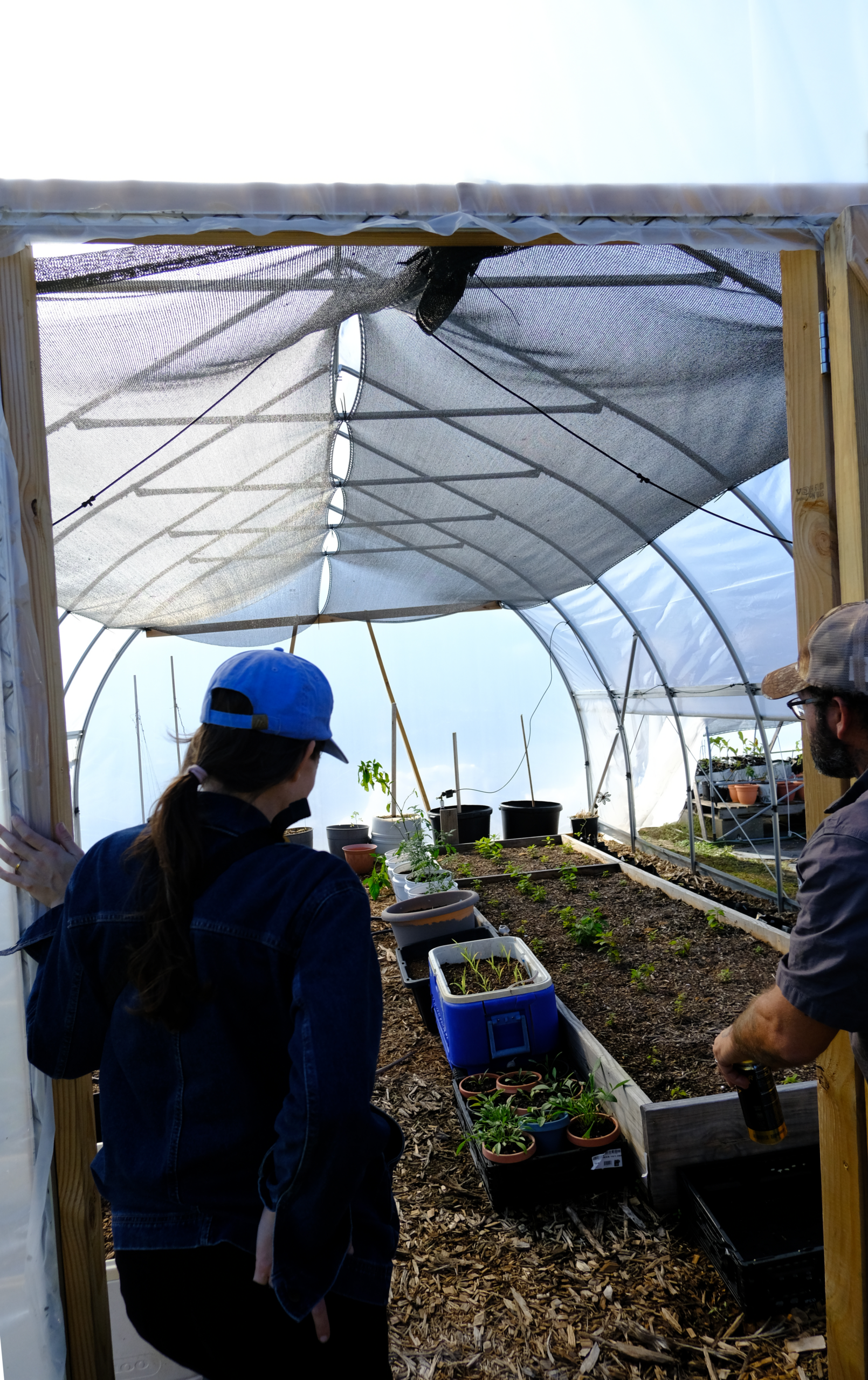
Despite this ongoing consolidation, there is production at a range of scales that correlate with three basic types of cultivation. Scale of production ranges from the smallest (a backyard nursery on less than 1-acre homestead) up to STREAM Wetland Services which has grown over 2 million plants to date since its founding in 1997. The first nursery type is best characterized by Dardar’s Bayou Plant nursery operated by Elder Chief Shirrel of the Grand Bayou Dulac Band of the Biloxi Chitimacha Choctaw; it is young, small, and deeply mission-driven, and operated by passionate people with little to no formal training. Elder Chief Shirrel operates the nursery in her backyard with her partner where she grows coastal plants and plants significant to her tribal traiteurs (healers) and other Indigenous people across the coast. “If you’re looking to buy, we’re looking to sell,” (personal communication, December 18, 2025) she told us with a smile before mentioning that some of the plants they tend aren’t for sale at all. She gestured towards the dozens of live oaks, describing them as “baby oaks that can just go to a loving home” because “we want those to be brought back this area, Southern Louisiana” (personal communication, December 18, 2025). At the middle scale are two nurseries operated by local non-profits: Common Ground Relief (CGR) and CRCL located in the New Orleans Ninth Ward and Violet, Louisiana respectively.
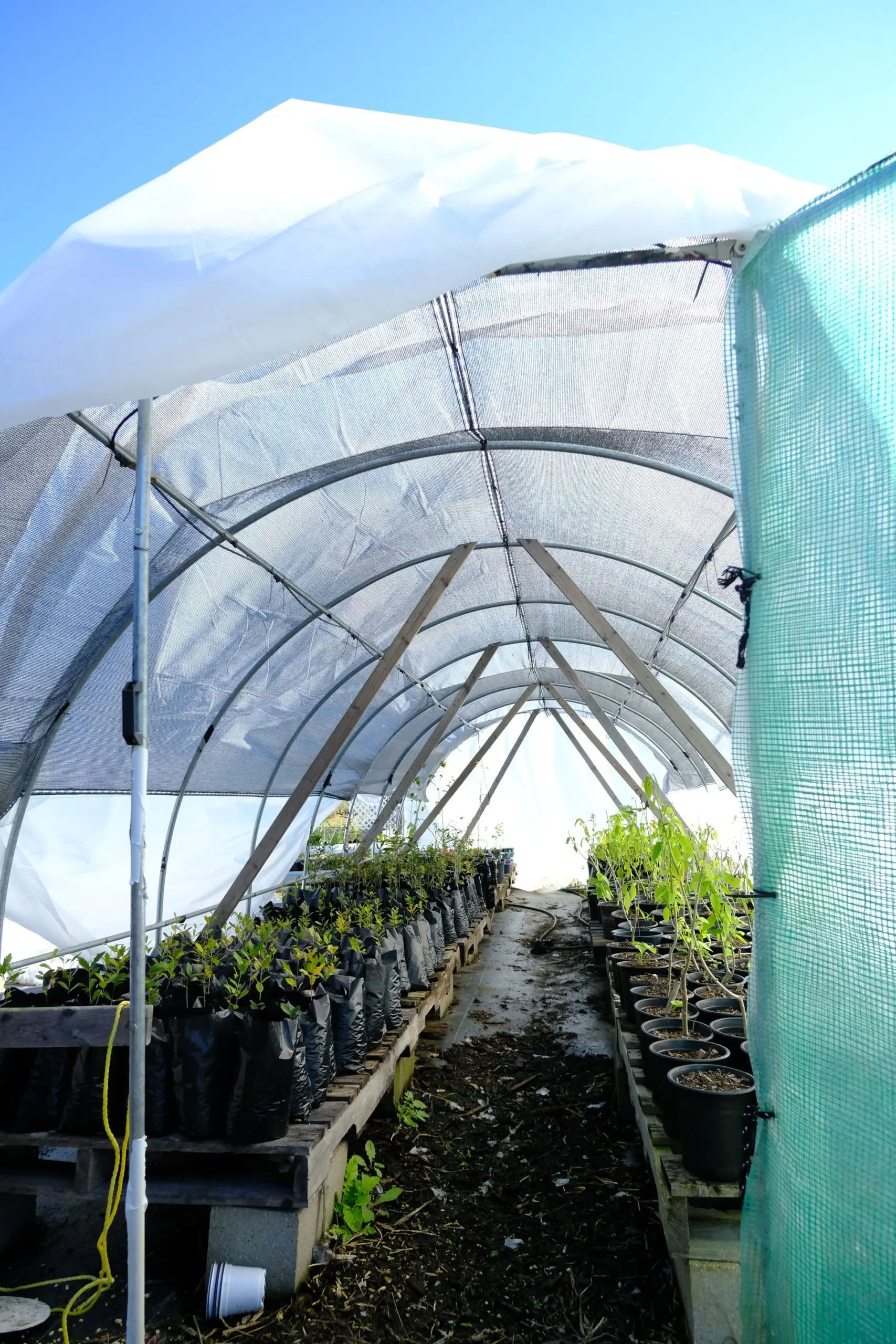
The largest scale at which nursery production is happening in coastal Louisiana is dominated by long-standing industrial nurseries born out of the wetland mitigation banking business that was long established before coastal restoration. One of those nurseries, operated by STREAM Wetland Services, LLC. in relatively upland Lake Charles is home to over 9,000 square feet of greenhouses and was the first licensed wetland plant nursery in the State. Their website advertises services to “major oil and gas companies, golf courses, theme parks, hunting and fishing clubs, and casinos and resorts,” among others. According to the day nursery manager, they were involved with the original creation of the specifications for coastal plant nursery stock and grow almost exclusively from the NRCS PMC plant releases, though he believed they needed to be updated to provide more flexibility related to ecotype requirements.
Fragmented Flows, Complex Supply Networks, and Temporal Gaps
Complex funding structures are siloed, creating meaningful gaps in project implementation and leading to competing timelines. As demonstrated above, various state and non-state actors are often at work in the same landscape, and funding fragmentation prevents growers from reaching the scale needed to be viable, which, in turn, drives consolidation. If projects are planted at all, they are monitored for installed plants rather than as full ecosystems undergoing successional development, and only as long as funds to monitor whether plants have lived are available. As one former CRCL employee described, “We … had other projects that were more about… marsh grass planting, planting on terraces, planting in places where they had experienced loss, and we were just putting grasses back. I feel like those had maybe less of a connection to ecological process, and I was a bit more skeptical about… and less interested in them than I was about the ones that really engaged in succession and sedimentation.” At the systems level, this results in temporal misalignments between individual projects and the plan’s stated climate adaptation goals, in which individual plants are installed and monitored solely for success rates, rather than an ecosystem-wide view based on succession and the potential for installed plants to recruit the growth of future vegetation.
The current plant procurement system embeds a set of assumptions about time—fast growth, discrete project cycles, bounded monitoring— that conflict with the temporal realities of ecological succession and climate adaptation. Mapping plantsheds reveals these competing temporalities and points toward design principles (localized / diverse germplasm, longer stewardship, patience with succession) that align plant procurement with adaptation, rather than extraction. Growers and administrators agree that growing from local germplasm is preferable, but there is no consensus over whether growing from local ecotype seed or cloned “plant material releases” is preferred.
Looking Ahead
Several key takeaways can be gleaned from this initial study, with implications for future iterations of the Louisiana Coastal Master Plan as well as for the broader applicability of plantshed mapping as a design methodology in nature-based infrastructure planning projects. The first and most evident finding is that the invisibility of plant procurement networks within official, often state-led planning frameworks is not a minor oversight—it should be acknowledged as a structural limitation that actively undermines the resilience goals that such coastal adaptation frameworks claim to advance. In allocating $16 billion USD to marsh creation while treating the plant material those projects require as an undifferentiated commodity input, the Master Plan inadvertently reproduces extractive logics that mirror those responsible for the very land loss and ecological degradation it seeks to repair—including the oil and gas industry, estimated to be responsible for approximately 60 percent of all contemporary wetland destruction and coastal erosion in the Gulf of Mexico—by prioritizing volume over ecological integrity, speed over ecological diversity, and standardization over the place-based climatic knowledge of local growers and nursery operations. In doing so, at the procurement level, the plan risks perpetuating the same instrumental relationship to living matter that has historically driven coastal degradation. For plants put to work in Louisiana’s Coastal Master Plan, calls for reciprocity between designed landscapes and source landscapes remains aspirational but not achieved. The plantsheds documented here reveal just how far Louisiana’s restoration infrastructure is from that reciprocity—and what specific barriers such as consolidation, funding fragmentation, temporal misalignment presently stand in the way. In this way, making plantsheds visible and publicly accessible does not simply add information to the plan—it necessarily reframes and expands what the plan is responsible for and to whom, as part of a larger call for the Plan to attend to its intertwined social and ecological impacts, as opposed to its scientific and technical impacts alone.
The procurement systems supporting coastal restoration remain invisible to the plans that depend on them, representing critical gaps in the ability for coastal restoration efforts along Louisiana’s coast to provide resilient green infrastructure beyond simply “speeding up succession.” Despite a growing number of cultivation and practices that are run by those rendered most vulnerable by land loss—practices that expand genetic diversity, shorten supply chains, and create opportunities for economic justice in a region whose economy has long been structured around extraction —the Coastal Master plan relies on monocultural (often clonal) planting, solutionism masquerading as ecological restoration. Plantshed representation offers a corrective here: by making plant procurement networks legible as spatial, economic, and ecological systems, it reframes what coastal restoration planning is responsible for and to whom.
The plantshed methodology demonstrates that the gap between what coastal restoration plans project and what procurement systems can actually deliver is not only documentable but also a potential avenue for design. From seed collection through nursery cultivation to outplanting and succession, each stage of the plant’s journey through the landscape is a site for potential intervention in developing policy, setting procurement standards, and generating community investment. Integrating production landscapes into coastal restoration planning, in this way, is not a peripheral concern but a precondition for the forms of resilience the Master Plan expresses its intent to build—from seed to swamp.
Conclusion
Despite a growing number of cultivation practices that are community-engaged, expand genetic diversity, and pose opportunities for economic justice, projects constructed via the Coastal Master Plan often rely on monocultural and clonal planting, if they even install plants in the first place. Integrating plant production landscapes into the system of coastal restoration is part of a larger call for environmental justice along the coast. It would allow smaller, localized growers to benefit from federal funds, foreground slower successional processes, and transition to a reciprocal model of restoration—from seed to swamp.
Author(s) and/or Contributor(s)
Contributors
Cite this item
Leah Kahler (2026) Plants and Landscapes on the Move: Mapping Plant Procurement Networks in Louisiana’s Coastal Restoration Infrastructure. The Landscape Exchange, Landscape Research Group. Published 26 August 2026.
Back to the library
283 items, free to read and free to contribute to.