Project write up: Heritage Sites and Ceremony from Bed to Land (2025)
Two Indigenous disabled people, in the Sonoran Desert and the Long Island Pine Barrens, trace their lands through a year of weekly call-and-response and art-making.
moira williams & Naomi Ortiz
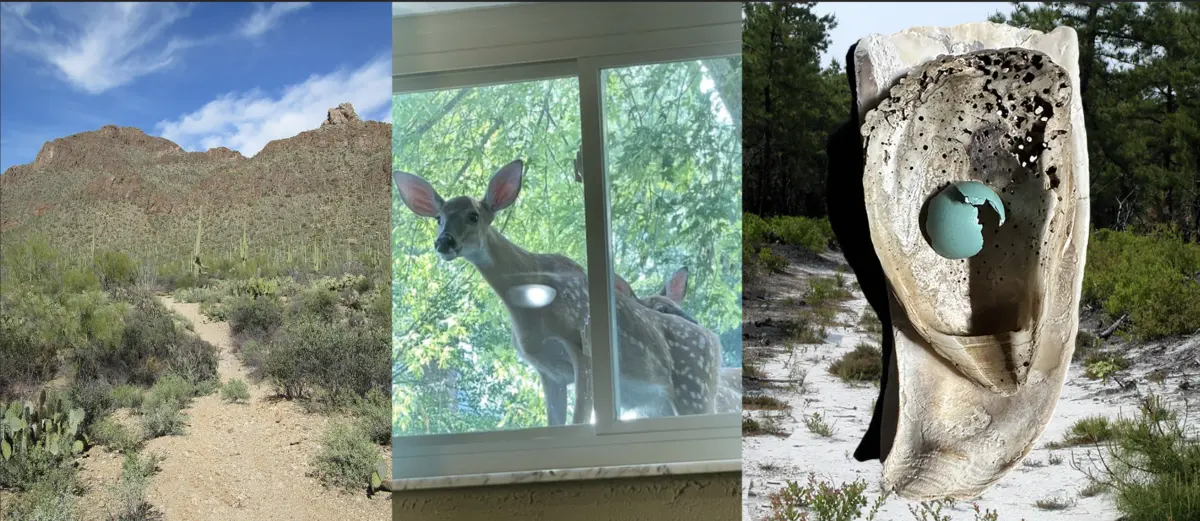
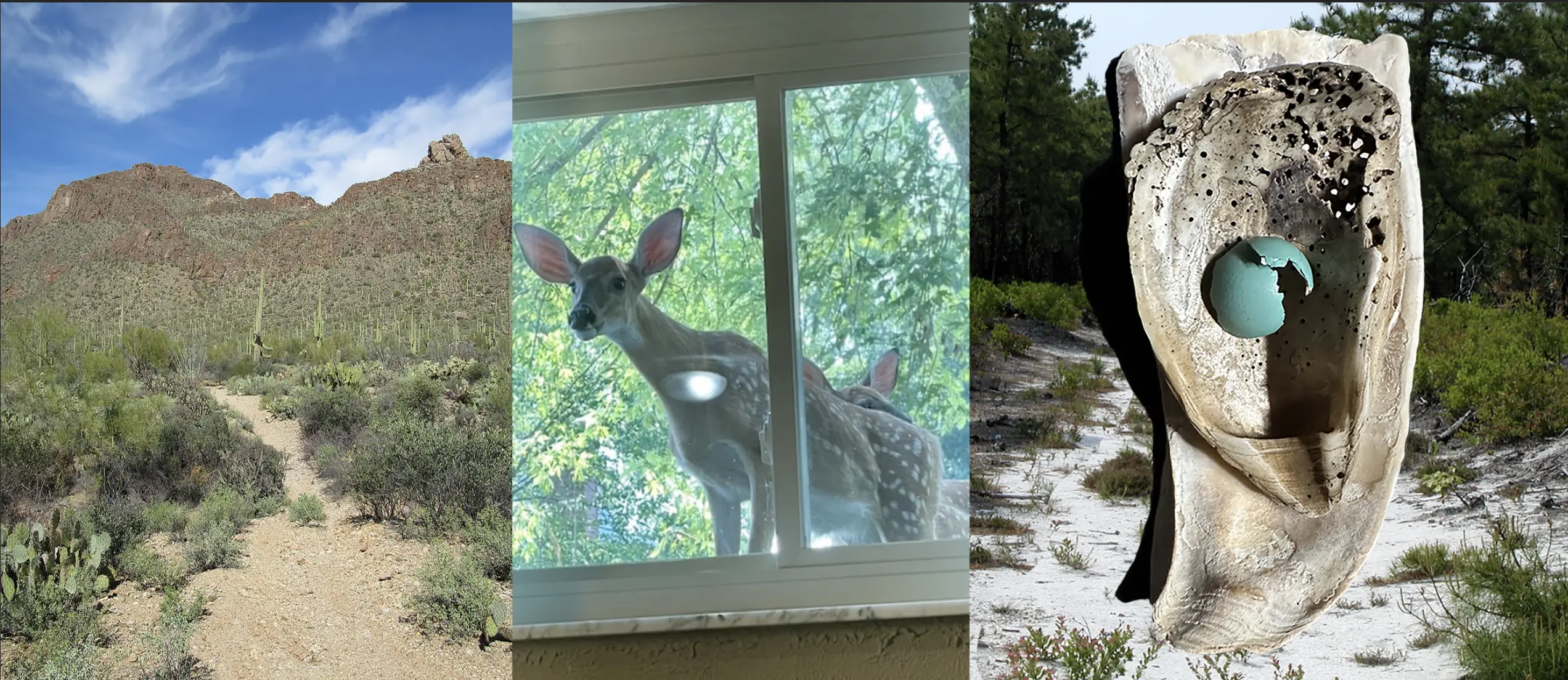
Disabled communities do not regularly have access to the environment in the ways that able-bodied people engage with or perceive nature. For us it can mean moving along the edges of parking lots, sharing images, sounds, or ceremony experienced from our window while in bed to physically being in the land.
We are two Indigenous disabled people. One of us lives within the American Sonoran Desert and the other in the Long Island, New York Pine Barrens; each are unique bioregions. How do we as Indigenous disabled people access, engage, and move with these lands when we are immobile?
During a year-long weekly call and response process we will trace these lands listening for story and medicine which disrupts the land’s colonial history/state. We will reimagine our place within these landscapes through our lived experiences, embodied research, interdependent art-making together with Disability Justice, Environmental Humanities, and IndigiTech to share, connect to the land, move outside our bodies, and care for one another. By cripping stasis and immobility, pairing each with the Indigenous wisdom that, “all ceremony is for the purpose of movement,” (Maria de la Cruz, Birthworker), we will confront this perceived contradiction and broaden the definition of mobility to encompass relationships between bed and land.
Author(s) and/or Contributor(s)
Contributors
Cite this item
moira williams (2025) Project write up: Heritage Sites and Ceremony from Bed to Land (2025). The Landscape Exchange, Landscape Research Group. Published 2 July 2025.
Back to the library
283 items, free to read and free to contribute to.