Revealing the Cultural Landscape of Sidi Bou Saïd through Landscape Design
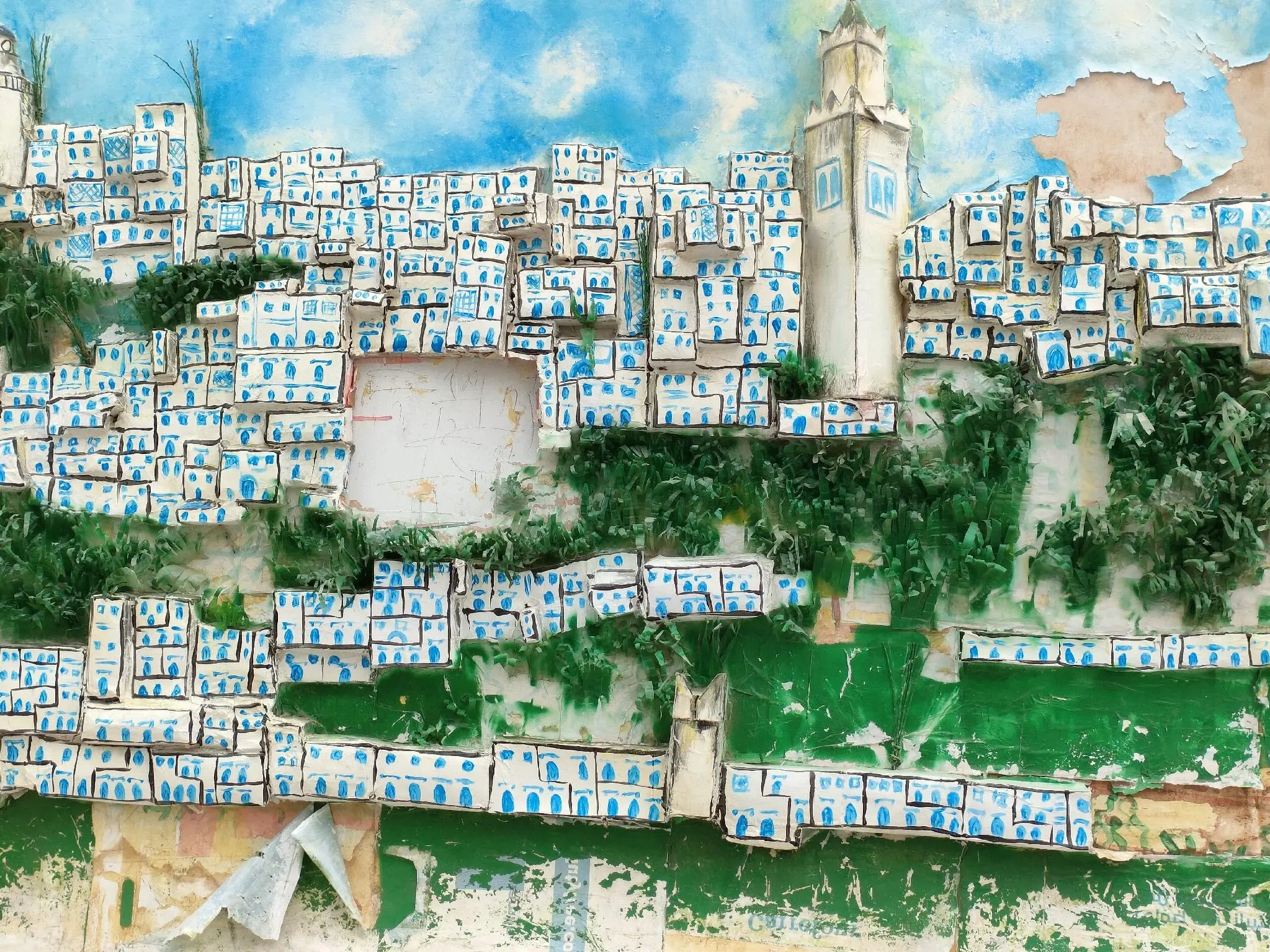
In this photo story, Saida Hammami Habibi explores how Landscape Engineering students use Sidi Bou Saïd in Tunisia as a living, open-air laboratory, moving from observation and landscape reading through analysis and interpretation to develop design responses grounded in cultural identity, heritage and place. Through fieldwork and student projects, she shows how understanding landscape can become the foundation for sensitive, context-aware intervention.
A Pedagogical Approach to Landscape Reading, Interpretation and Heritage Valorisation
Saida Hammami Habibi
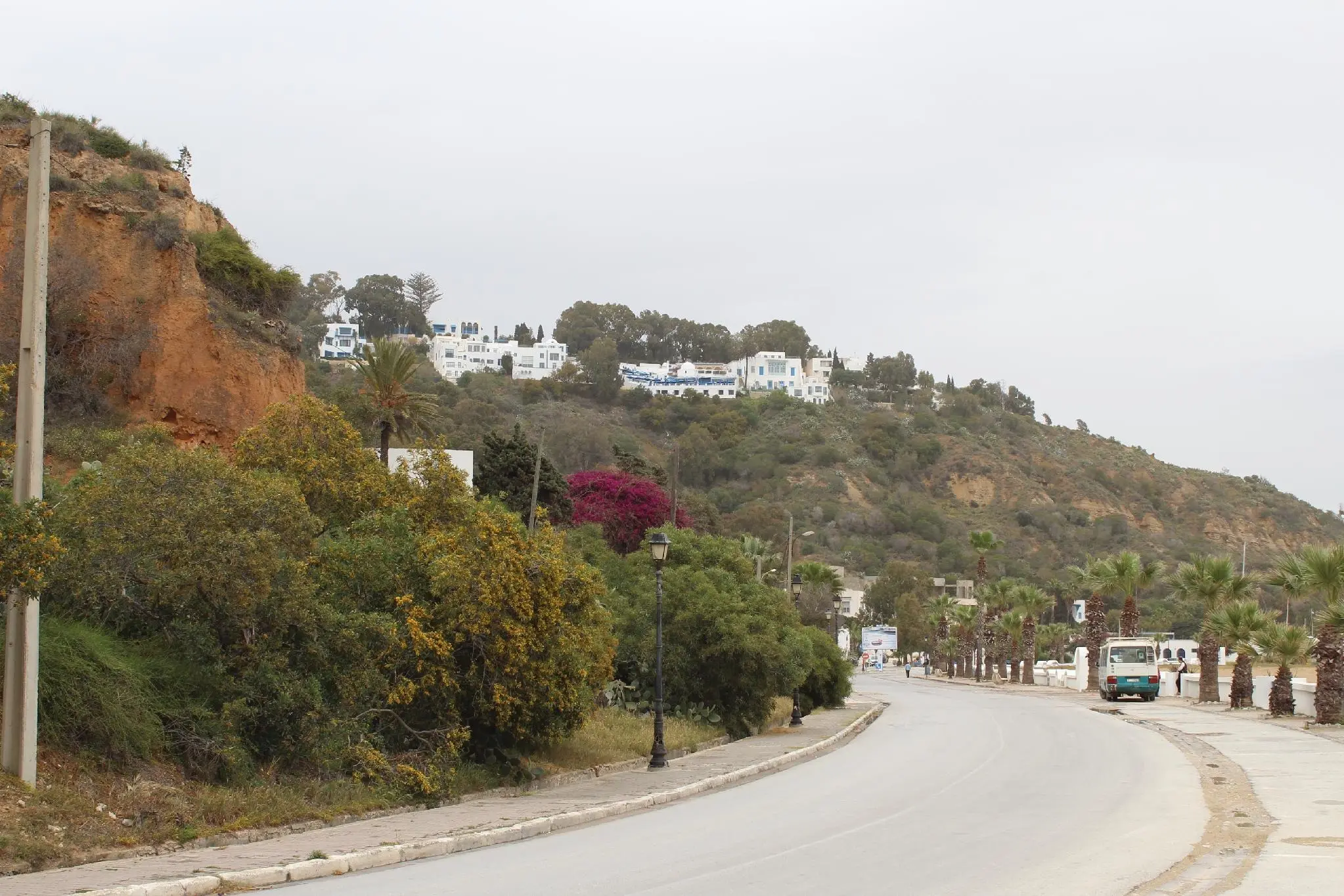
Using Sidi Bou Saïd as a living, open-air laboratory, Saida Hammami Habibi explores how observation, interpretation and landscape design can help students understand cultural landscapes and develop sensitive, context-aware approaches to heritage.
Sidi Bou Saïd is an emblematic Mediterranean cultural landscape, where architecture, topography, vegetation, spirituality, and the sea come together to create a unique sense of place. Its iconic white-and-blue architecture, winding streets, gardens, viewpoints, and relationship with the Gulf of Tunis express a strong cultural identity shaped by centuries of interaction between people and their environment. Its inscription on the UNESCO World Heritage List on 25 July 2026 recognizes the outstanding universal value of this living landscape and highlights the importance of preserving both its tangible and intangible heritage.
Heritage as a Living Landscape
Sidi Bou Saïd can be understood as a living cultural landscape, where historical layers interact with contemporary uses, natural structures, social practices and cultural representations. This perspective considers both material heritage and the meanings associated with the landscape.
Landscape Design as a Pedagogical Approach
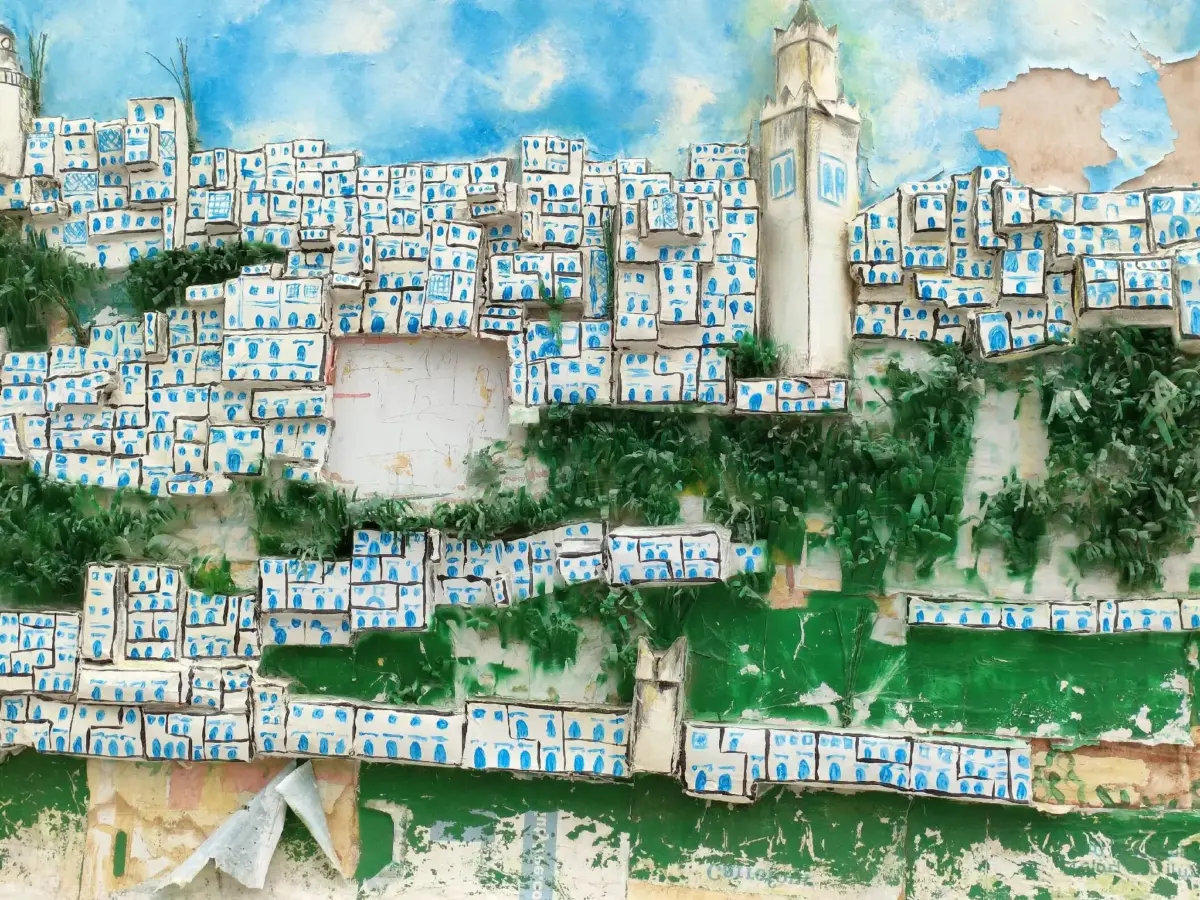
Within the Landscape Engineering program at the High Agronomic Institute of Chott Meriem, Sidi Bou Saïd serves as a living, open-air pedagogical laboratory. The site enables students to confront theoretical knowledge with the complexity of a real cultural landscape through a progressive and experiential methodology based on observation, description, analysis, interpretation, conceptualisation, and design. This approach encourages students to develop a sensitive understanding of place while learning to translate landscape values, spatial relationships, and heritage characteristics into meaningful and context-sensitive design proposals.
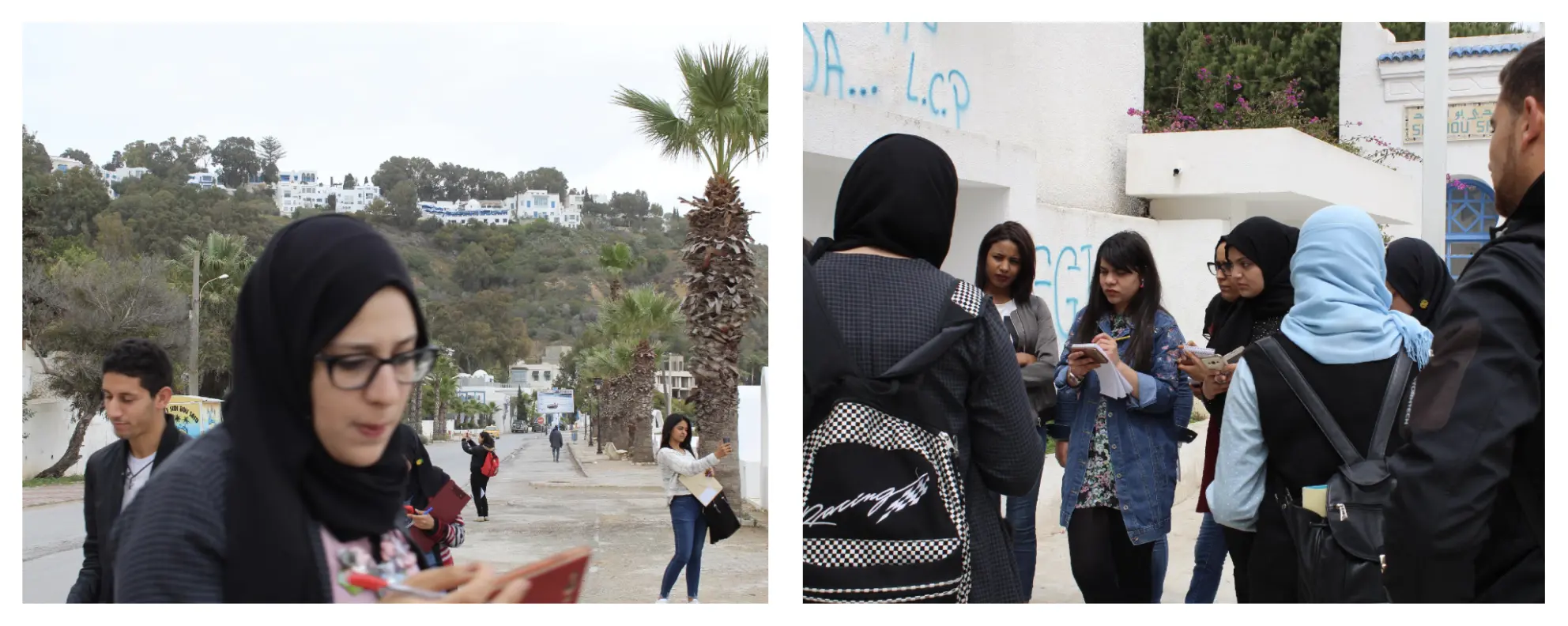
Sensory Perception and Landscape Reading
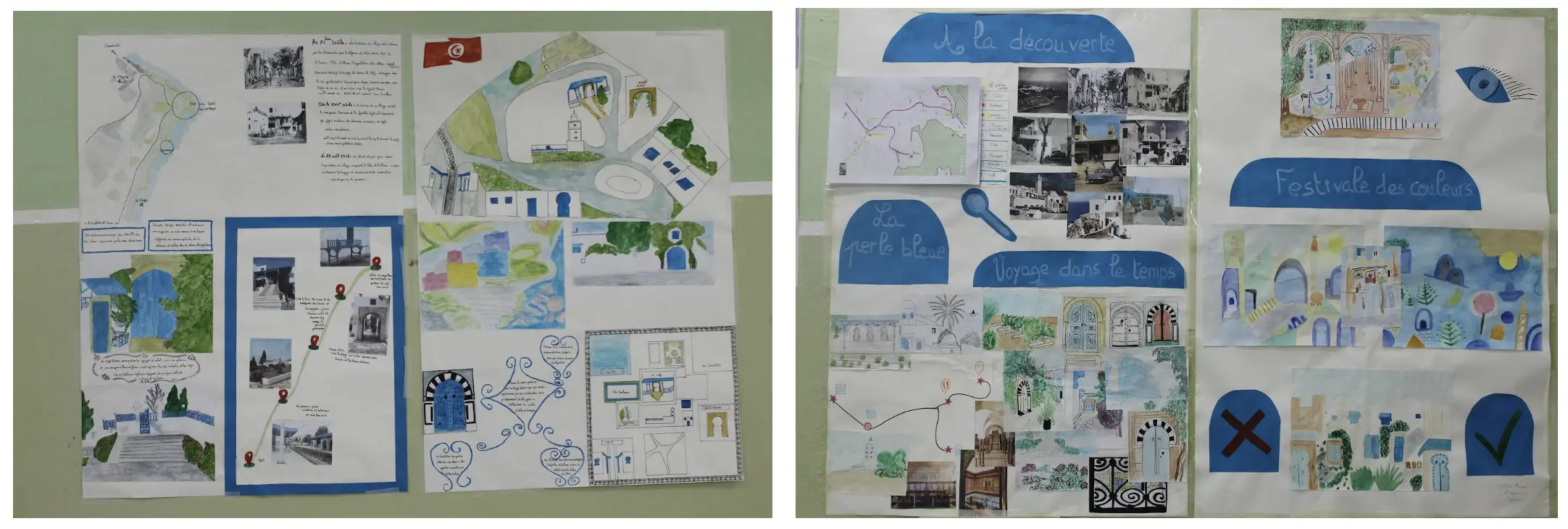
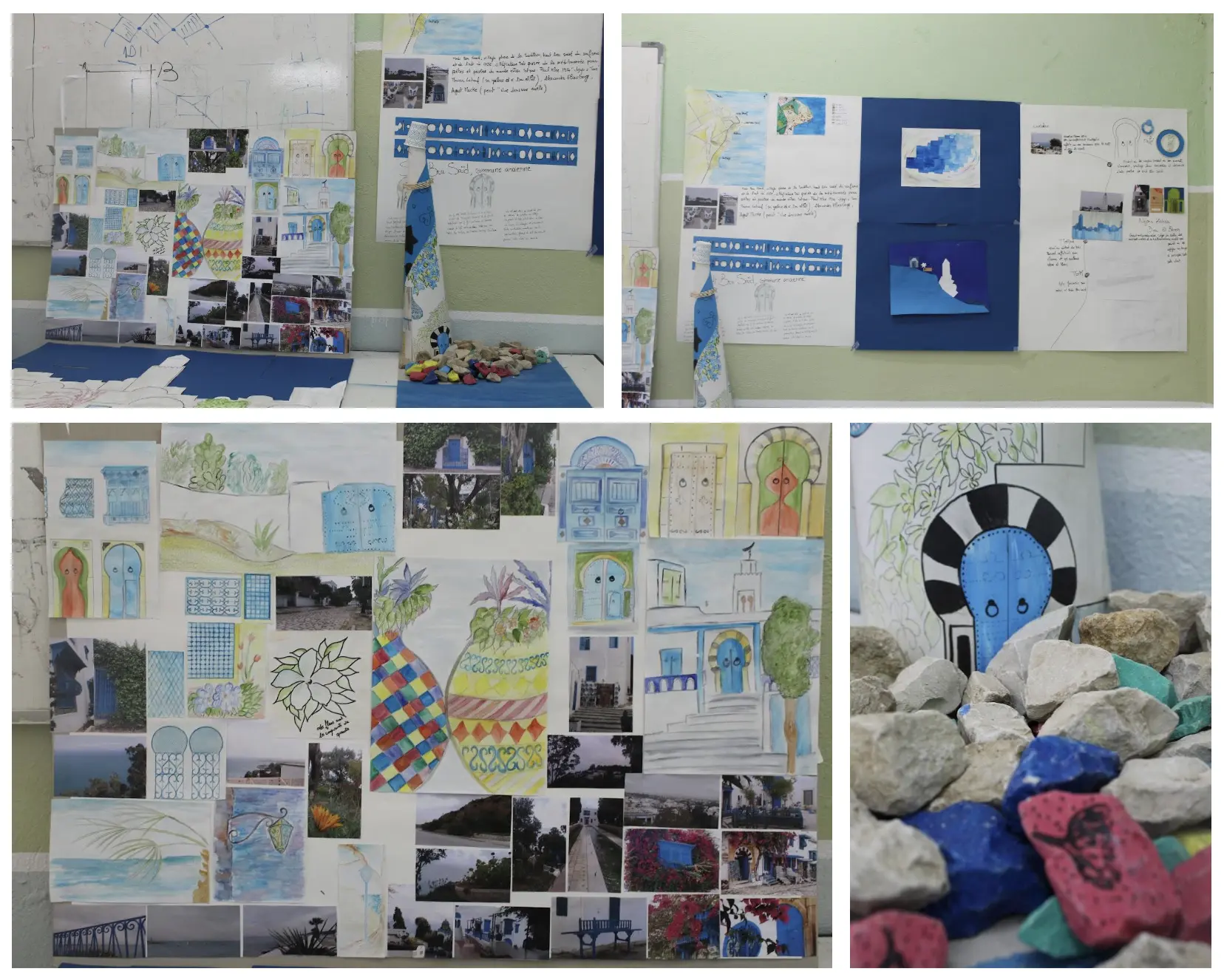
The process begins with direct sensory observation. Students explore spatial sequences, atmospheres and significant landscape elements. Individual perceptions are encouraged as a means of revealing the diversity and complexity of landscape readings.
Observation Filters as an Analytical Tool
Observation filters guide students through key dimensions such as topography, urban morphology, architecture, vegetation, materials, colours, circulation, uses, historical traces, visual relationships and symbolic elements. They transform perception into structured observation and facilitate comparison between different readings of the same territory.
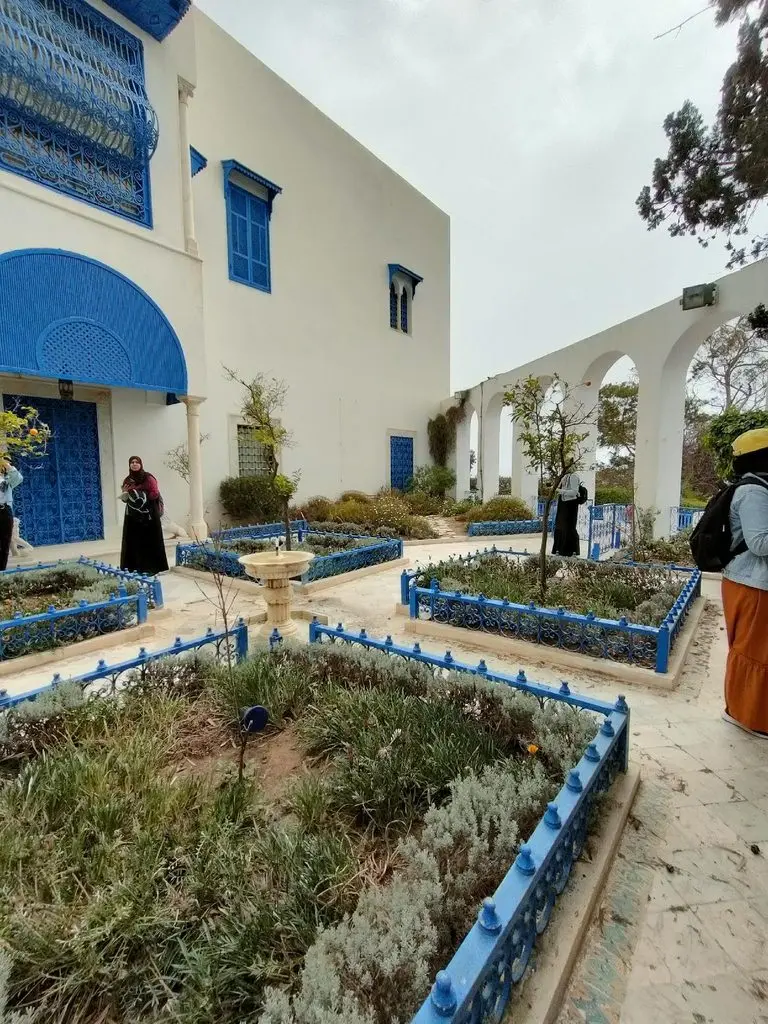
Fig. 4 Landscape perception and reading (2022)
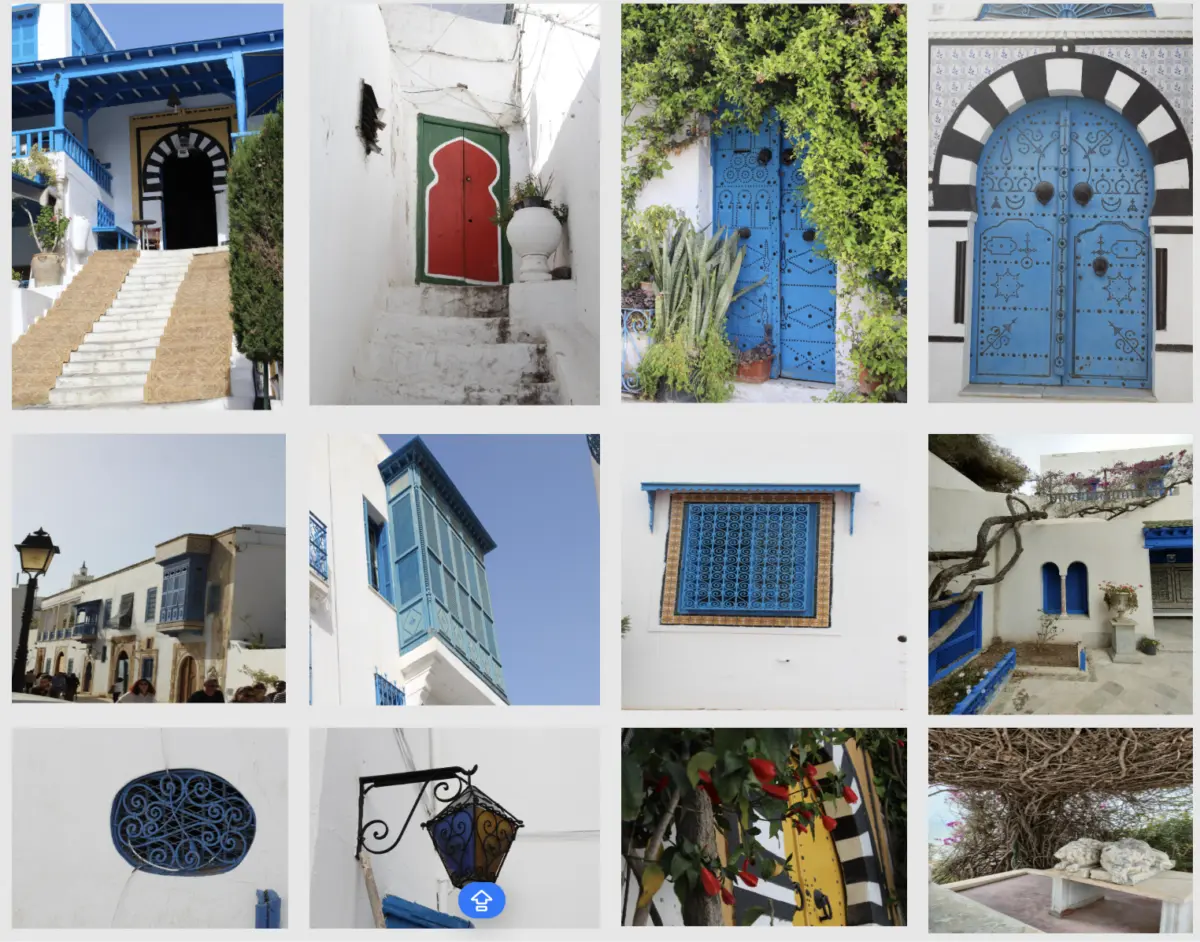
From Analysis to Interpretation
Analysis identifies spatial structures, continuities, ruptures and landscape values. Interpretation connects these elements with historical processes, cultural meanings, social practices and collective memory. Students move from “What is present?” to “How is it organized?” and “What values does it express?”.
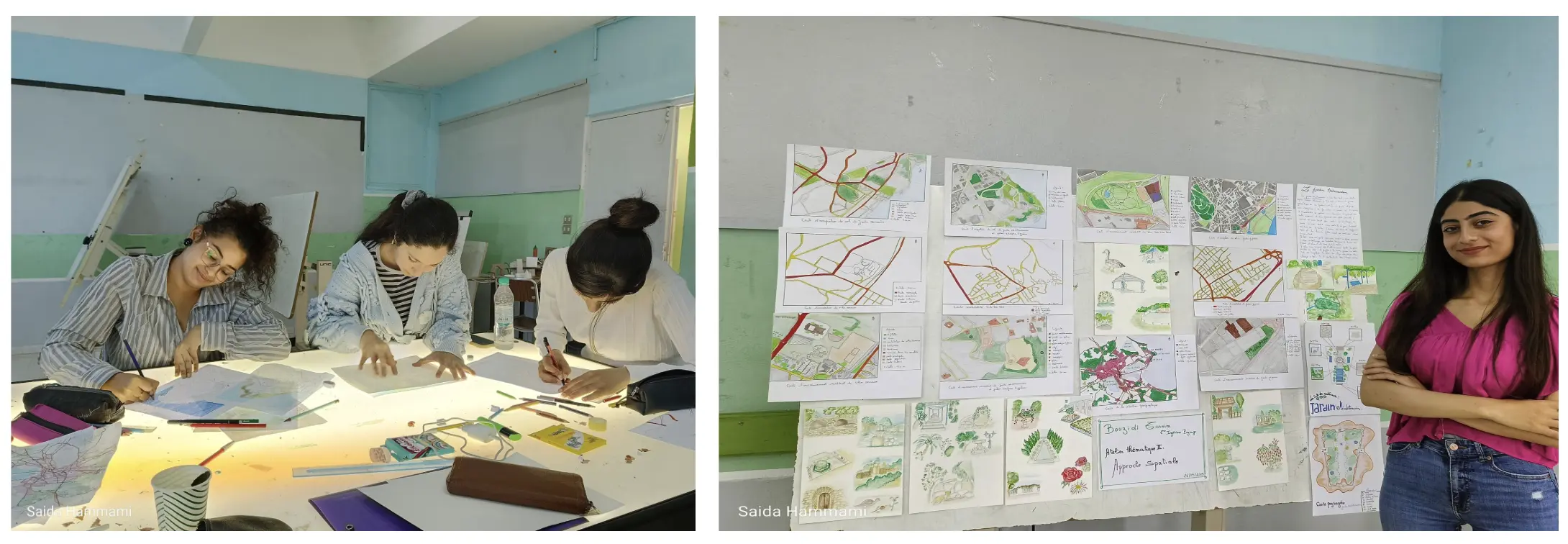
A Holistic and Multiscalar Approach
The methodology combines territorial, urban and architectural scales, examining relationships between the village, topography, coastline and Gulf of Tunis, as well as streets, gardens, public spaces, façades and visual sequences. The landscape is thus understood as an interconnected system.
From Landscape Diagnosis to Project Concept
The diagnosis identifies landscape values, potentials, vulnerabilities and issues, providing the basis for a landscape intention and structuring concept. The sequence Observe | Describe | Analyze | Interpret | Conceptualize | Design ensures that project decisions emerge from territorial knowledge.
Landscape Design and Heritage Valorisation
Landscape design becomes a mediating tool between heritage, territory and society. It combines heritage conservation with the interpretation of landscape dynamics and the development of interventions compatible with local identity.
Understanding in Order to Act Effectively
The Sidi Bou Saïd experience demonstrates that landscape design can be simultaneously a method of territorial knowledge, an interpretative process and an instrument of heritage valorisation. By placing understanding before intervention, students develop sensitive, critical and context-aware approaches to cultural landscapes.
Keywords: Cultural landscape; Landscape design; Heritage valorisation; Landscape pedagogy; Sidi Bou Saïd.
More from around this time
- LRG Research Fund 2026: Making Colombia’s material knowledge visible
- Help shape the proposed Natural History GCSE for England
- LRG Research Fund 2026: Mapping the hidden relationships of Setiu Wetlands
- LRG Research Fund 2026: Living with slow disaster in Venice
- LRG Research Fund 2026: Envisioning Kilifi’s future through the eyes of its young people
More news
All news
News · 3 September 2026
New podcast revisits Laura Alice Watt’s The Paradox of Preservation as its tenth anniversary approaches
LRG Chair Professor Laura Alice Watt joins the *In Common* podcast to revisit 'The Paradox of Preservation' as the book approaches its tenth anniversary—and to consider
News · 28 August 2026
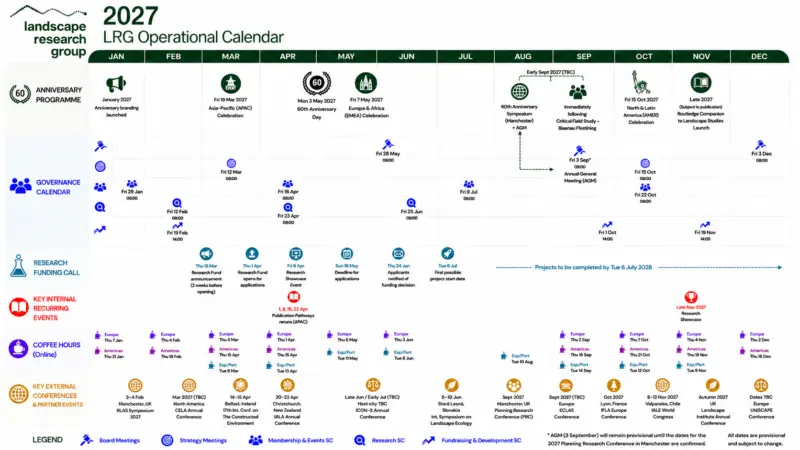
LRG at 60: our 2027 anniversary programme
Explore the developing programme for LRG’s 60th Anniversary year, including regional celebrations, research and network activities, and our proposed flagship gathering in September 2027. Discover the
News · 24 July 2026
Help shape the future of LRG
The Landscape Research Group is seeking new trustees to help shape the future of landscape research. Join our international Board and contribute to research, publications, governance
Get stories like this by email
The newsletter carries the quarter’s best of these, straight to your inbox.